Difference Between Furlough and Layoff: A Simple Guide for Employees and Employers
If you’ve seen headlines about companies reducing staff, you’ve probably come across the words furlough and layoff. Understanding the difference between furlough and layoff is important because, while they are sometimes used interchangeably in casual conversation, they have very different meanings.
Understanding these two terms can help employees know what to expect and assist business owners in making informed workforce decisions during difficult periods.
This guide explains both terms in plain English, highlights their key differences, and provides practical examples for employees, managers, and employers.
What Is a Furlough in the Difference Between Furlough and Layoff?
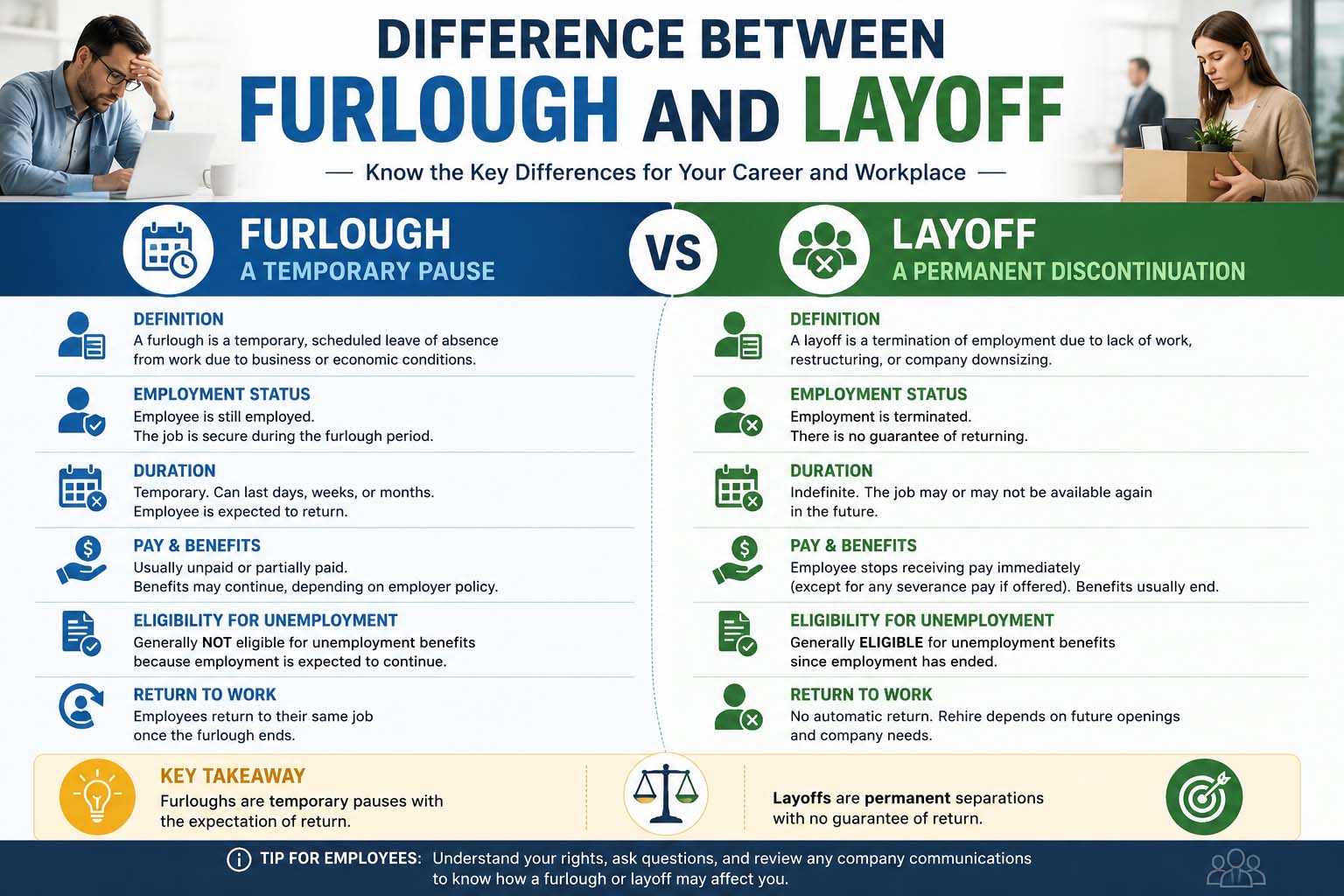
A furlough is a temporary unpaid leave or reduction in work hours where the employee remains employed by the company.
In other words, the employment relationship continues even though the employee may not be working or receiving their regular paycheck during the furlough period.
Businesses often use furloughs when they expect work to return in the future.
For example, common reasons include:
- Seasonal slowdowns
- Temporary financial challenges
- Natural disasters
- Government shutdowns
- Short-term declines in customer demand
Ultimately, the goal is usually to bring employees back once business conditions improve. Moreover, many organizations rely on Human Resources Outsourcing Services to manage workforce changes efficiently during these periods.
What Is a Layoff in the Difference Between Furlough and Layoff?
A layoff is generally the termination of employment due to business reasons rather than employee performance.
Unlike a furlough, employees are no longer actively employed after a layoff unless they are later rehired.
For example, layoffs may occur because of:
- Company restructuring
- Cost reductions
- Business closures
- Economic downturns
- Department eliminations
- Automation
Although some layoffs are temporary, many become permanent.
Difference Between Furlough and Layoff at a Glance
| Feature | Furlough | Layoff |
|---|---|---|
| Employment Status | Employee remains employed | Employment ends |
| Pay | Usually unpaid during leave | Employment ends, pay stops |
| Return to Work | Often expected | May require rehiring |
| Benefits | May continue depending on employer | Often end, though continuation options may exist |
| Business Purpose | Temporary workforce reduction | Longer-term workforce reduction |
Ultimately, the biggest distinction is whether the employment relationship continues.
What Is the Difference Between Furlough and Layoff?
One of the most common questions people ask is what is the difference between furlough and layoff.
The simplest answer is:
- A furlough temporarily pauses work while keeping the employee on the company’s payroll records.
- A layoff ends the employment relationship because the employer no longer has work available or is reducing staff.
Although both situations can affect income, their long-term impact is often different.
Difference Between Layoff and Furlough for Employers
Looking at the difference between layoff and furlough from the employer’s perspective helps explain why companies choose one over the other.
When Businesses Choose Furloughs
Companies may use furloughs if they believe business will recover soon.
For example:
- Seasonal businesses
- Temporary factory shutdowns
- Unexpected financial disruptions
As a result, keeping trained employees connected to the company can make restarting operations much easier.
When Businesses Choose Layoffs
Layoffs are more common when businesses expect long-term changes.
For example:
- Permanent budget reductions
- Office closures
- Business mergers
- Organizational restructuring
In these situations, employers may no longer have positions available.
How Furloughs and Layoffs Affect Employees
Both situations create uncertainty, but the experience is different.
During a Furlough
Employees may:
- Stop working temporarily
- Receive little or no pay
- Remain employed
- Return when operations resume
Depending on company policy and local laws, some benefits may continue during the furlough.
During a Layoff
Employees generally:
- Stop working
- Lose regular income
- End employment
- Begin searching for new opportunities
However, some employers may provide severance packages, career support, or rehiring opportunities if business conditions improve. Employees reviewing alternative arrangements may also benefit from understanding the difference between part time and full time employment.
Why Companies Use Furloughs
Furloughs allow organizations to reduce short-term expenses without permanently losing experienced staff.
For example, advantages may include:
- Lower payroll costs
- Easier business recovery
- Employee retention
- Reduced hiring costs later
If business rebounds quickly, bringing back furloughed employees is often faster than recruiting and training an entirely new workforce.
Why Companies Choose Layoffs
Layoffs are usually part of larger business decisions.
For example, potential reasons include:
- Long-term financial challenges
- Technology replacing certain roles
- Declining product demand
- Business relocation
- Organizational restructuring
Although difficult, layoffs may help businesses remain financially stable.
What’s the Difference Between Furlough and Layoff for Employees?
Many workers ask what’s the difference between furlough and layoff because both situations involve reduced income.
The key distinction is job continuity.
During a furlough:
Your employer generally expects you to return.
During a layoff:
Your employment usually ends unless you are rehired later.
Therefore, understanding this difference can help employees plan financially and professionally.
What Is the Difference Between Layoff and Furlough for Employers?
From a management perspective, what is the difference between layoff and furlough often comes down to future staffing plans.
For example, a company expecting business to recover within weeks or months may prefer furloughs.
On the other hand, a company making permanent structural changes may choose layoffs instead.
Business leaders also consider:
- Financial outlook
- Labor costs
- Hiring expenses
- Employee retention
- Operational needs
In addition, understanding different types of work environments can help employers evaluate future staffing and operational needs.
Advantages and Disadvantages of Furloughs and Layoffs
| Furlough | Layoff |
|---|---|
| Retains employees | Reduces long-term payroll costs |
| Easier to restart operations | Supports permanent restructuring |
| Employees remain connected to company | May simplify organizational changes |
| Employees temporarily lose income | Employees lose their jobs |
| Business uncertainty continues | Rebuilding workforce later may be expensive |
Ultimately, neither option is easy, but each serves different business needs.
Furlough and Layoff Example Scenarios
Example 1: Seasonal Tourism Business
A ski resort closes during the off-season.
Instead of terminating staff, the business furloughs employees until winter begins.
Example 2: Manufacturing Plant
A factory temporarily pauses production because of supply chain delays.
Therefore, workers receive furlough notices until operations resume.
Example 3: Company Restructuring
A business permanently closes one department after introducing new technology.
As a result, affected employees are laid off because their positions no longer exist.
Common Furlough and Layoff Misunderstandings
Several misconceptions surround these terms.
A Furlough Means You’ve Lost Your Job
Not necessarily.
In fact, many furloughed employees eventually return to work.
Every Layoff Is Permanent
Some employers rehire laid-off employees if business improves.
Performance Causes Every Layoff
Generally, layoffs happen because of business conditions rather than employee performance.
Tips for Employees Facing a Furlough or Layoff
If you’re notified about either situation, consider these steps:
- Review company communications carefully.
- Understand your benefits.
- Ask questions about timelines.
- Update your resume.
- Monitor company announcements.
- Stay connected with professional contacts.
In particular, these Tips for Networking Events can help employees maintain and expand professional connections. Ultimately, being prepared can make transitions less stressful.
Tips for Employers Considering a Furlough or Layoff
Clear communication helps maintain trust during difficult decisions.
Therefore, business leaders should:
- Explain the reason for workforce changes.
- Share realistic timelines.
- Communicate consistently.
- Provide available support resources.
- Treat employees respectfully.
As a result, transparent communication often improves morale among both departing and remaining employees.
Quick Furlough and Layoff Comparison Checklist
| Question | Furlough | Layoff |
|---|---|---|
| Still employed? | Yes | Usually no |
| Working? | Usually no | No |
| Return expected? | Often yes | Not guaranteed |
| Long-term solution? | Usually no | Often yes |
| Hiring needed later? | Less likely | More likely |
Frequently Asked Questions About the Difference Between Furlough and Layoff
What Is the Difference Between Furlough and Layoff?
A furlough is a temporary unpaid leave or reduction in work while employment continues. In contrast, a layoff usually ends employment because of business needs.
Do Furloughed Employees Keep Benefits?
Benefit continuation depends on the employer’s policies, benefit plans, employment agreements, and applicable laws.
Can Laid-Off Employees Return?
Yes. For example, some employers rehire former employees if positions become available again.
Are Layoffs Related to Employee Performance?
Generally, layoffs happen because of business circumstances rather than individual job performance.
Which Option Is Better for Businesses?
That depends on the company’s financial situation and long-term plans. Businesses expecting a temporary slowdown may favor furloughs, while permanent organizational changes often lead to layoffs.
Key Takeaways About the Difference Between Furlough and Layoff
Understanding the difference between furlough and layoff helps both employees and employers make sense of workforce changes during challenging times. A furlough is usually a temporary pause in work with the expectation that employees may return, while a layoff typically ends the employment relationship because of long-term business needs.
For employers, choosing the right approach depends on future staffing expectations and financial conditions. For employees, knowing which situation applies can make it easier to plan finances, understand available benefits, and prepare for the next career step if necessary.